
You Have the Right To.
Social change movements are rarely simple.
They don’t look like one program.
They don’t produce overnight reform.
And they don’t always fit neatly into one category.
Over the past few years, we’ve heard it often:
“Is nafda a citizenship program?”
“Is it school transformation?”
“Is it advocacy?”
“Is it a student leadership and school-community exchange program?”
The honest answer?
It encompasses all of these — but never in isolation.
Why It Can Feel Complex
nafda was born in 2022, in the wake of Lebanon’s deep structural challenges, as a response to disconnection, exclusion, and weakened public institutions. From the beginning, we saw schools not simply as institutions of instruction, but as catalysts for social change.
The name itself means renewal — a “spring cleaning” of systems and mindsets.
But renewal takes time.
Some may first encounter us through Aal Seha, our flagship values-based citizenship game.
Others engage through School Transformation Projects such as STEAM, agripreneurship, or wellbeing.
Others connect through advocacy hubs, principal leadership pathways, or the National nafda Student Council.
Each of these is part of the same architecture.
But if you encounter nafda through only one of these entry points, it may feel like that is the whole story.
It isn’t.
They are interconnected components of a broader model designed to move schools from internal activation to collective impact.
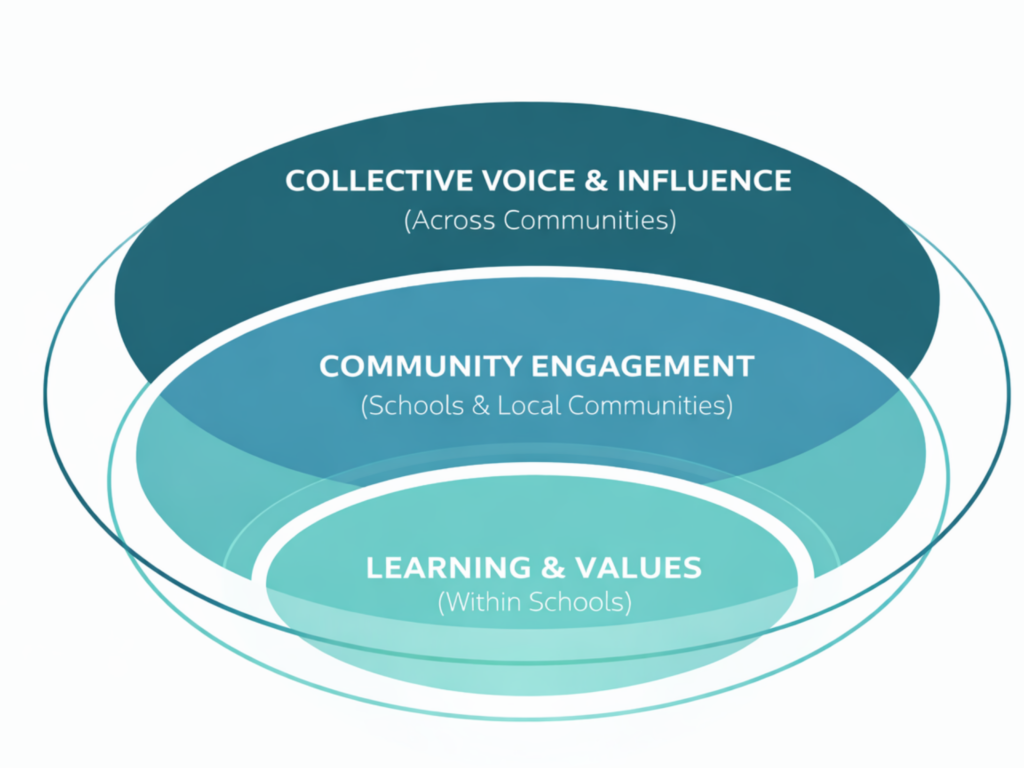
Transformation unfolds across 3 interconnected domains:
Within schools – embedding the values of engaged citizenship, social justice, and good governance into learning culture and daily practice.
Between schools and communities – translating values into locally grounded action through transformation projects.
Across communities – connecting schools beyond geographic and social divides, strengthening shared responsibility and collective voice.
-
These domains reinforce one another.
-
Internal culture enables community engagement.
-
Community collaboration builds collective influence.
Roots Before Visibility
nafda follows a deliberate, phased model.
When schools first join the network, they focus on embedding our core values into learning and school culture. Through tools like Aal Seha, leadership development, and community initiatives, schools strengthen trust, shared responsibility, and active citizenship.
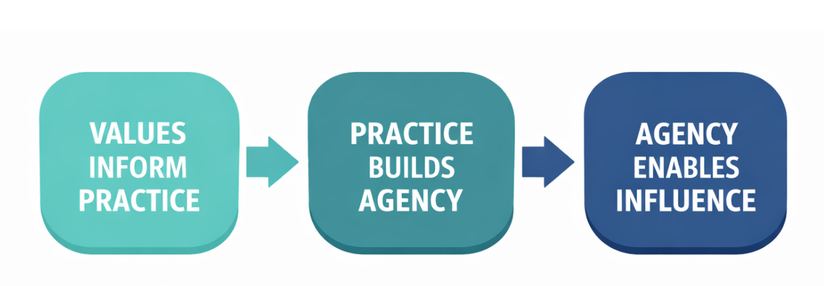
Later, that foundation translates into practice and influence. School Transformation Projects emerge directly from cultivated values — whether through STEAM, agripreneurship, wellbeing, or civic initiatives. These are not separate programs; they are expressions of values in action.
THIS PROGRESSION IS INTENTIONAL:
When principals first joined advocacy hubs, the work was QUIET — structured reflection, evidence review, stakeholder mapping. Three years later, those same leaders are co-developing policy briefs and preparing to contribute to national education dialogue.
When Aal Seha began in 2023, it was a classroom-based citizenship game. Today, it has been adopted within the First Lady’s Madrasat Al-Muwatana initiative — reflecting one of our long-term aspirations: that elements of the nafda model become embedded beyond our immediate partner schools and contribute to systemic change. (Learn more about Aal seha and its impact here).
But adoption is not the finish line.
It is evidence that roots are taking hold.
And as these roots deepen, the next chapter of this work will become even more visible.
Impact Across Levels
Because we are working across multiple levels simultaneously, transformation becomes visible in layered ways:
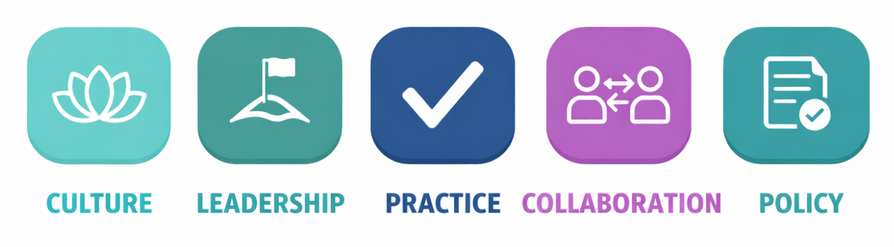
Across our network:
• 85% of schools demonstrate significant transformation across nafda’s pillars — embedding values, transforming learning, activating communities, and influencing policy.
• 89% of students show advancement in agency and participation, reflecting deeper ownership of learning and community initiatives.
• 74% of principals report increased agency in influencing education policy, signaling a shift from compliance-driven administration to participatory leadership.
Beyond these indicators, schools are collaborating across regional and social divides, strengthening peer networks, and contributing evidence-based insights to national dialogue.
These shifts are not isolated. They are not immediate.
They are cultural.
They are relational.
They are systemic.
They are cumulative.
So Yes — It Can Be Complex
Change that is both grassroots and systemic cannot be reduced to a single program label.
It unfolds.
And we remain committed to building it — patiently, collaboratively, and with humility.
nafda was never meant to be easy to summarize.
IT WAS MEANT TO BE MEANINGFUL.
AND MEANINGFUL CHANGE TAKES TIME.