
Over the past few months, schools across Lebanon have taken on responsibilities far beyond their mandate. They hosted displaced families, served as shelters, navigated continued uncertainty, supported students through trauma and loss, and, where possible, continued teaching despite repeated disruptions.
Before anything else, we want to acknowledge the overseen champions: the school leaders, educators, and staff across the country. There were moments when the weight of the circumstances seemed overwhelming, yet they continued adapting, supporting their communities, and putting students first.
Across 39 schools, nafda focused on preserving trust, belonging, and social cohesion at a time when fear, uncertainty, and growing division could easily take hold. The emergency response activities engaged over 2,100 students, supported around 250 educators, and reached more than 4,000 community beneficiaries through dialogue, psychosocial support, community service, and civic engagement initiatives.
The video below captures the intervention and how they turned reflection into action.
This work is being carried forward under the Ministry of Education and Higher Education’s Initiative for Social Cohesion, in collaboration with the “School of Citizenship” initiative, the UNESCO Regional Office in Beirut, UNICEF, the National Center of Research and Development (CERD) , and TASC—ensuring that what is grounded in schools can also inform broader responses. Click here to learn more.
Whether inspired by our emergency response interventions or by Aal Seha, nafda’s citizenship tool, students have continued identifying needs in their communities and taking the initiative to respond.
These initiatives look different from one school to another, but they all reflect the same shift: students moving from participation to ownership.
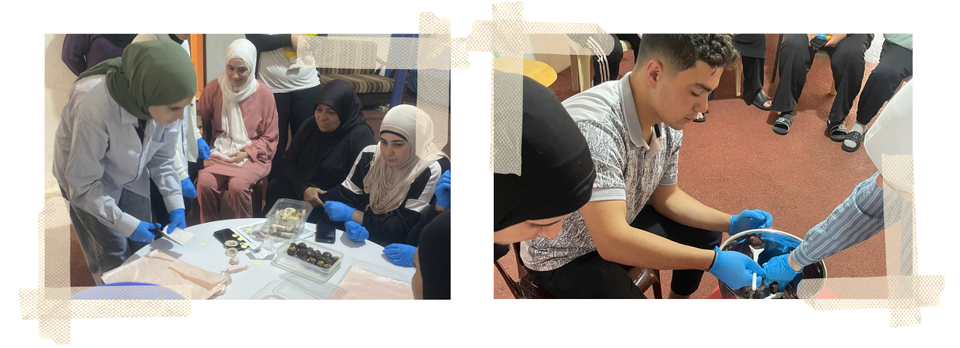
At Bzebbina Public High School, students worked alongside displaced women to support the development of small income-generating opportunities. Through training in sweets production, product branding, packaging, and marketing, they helped transform existing skills into products that could be sold, to generate an income, regain a sense of purpose, and take meaningful steps toward rebuilding their lives after experiencing displacement, loss, and uncertainty.
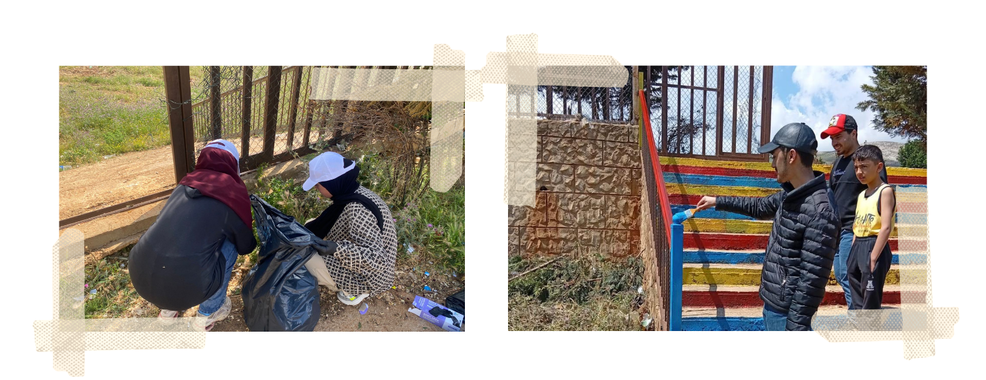
At El Hishi High School, students transformed a neglected public garden into a shared community space for residents and displaced families alike. By leading cleaning, planting, and maintenance activities in collaboration with local actors, they promoted environmental responsibility, inclusion, and community cohesion.
These are just a few examples of many initiatives that emerged across the nafda network this year. Across different communities, schools became spaces for support, dialogue, solidarity, and collective action in response to war and displacement.
If this work resonates with you, consider supporting nafda. Donations made through France and the US are tax-deductible for eligible donors.