When a country is at war, the instinct is often to preserve routines and offer young people a sense of stability.
Lebanon is living this tension today. After intense fighting beginning in October 2023 and a ceasefire on 26 November 2024, hostilities resumed on 2 March 2026. More than 750,000 people have been displaced — roughly one third of them children. Many schools have been damaged and over 400 have been turned into shelters. While some schools have reopened where conditions allow, many others remain closed as families weigh safety, shelter, and trauma.
Where schooling does resume, education remains essential — but it must also create space to acknowledge what students have lived through and what their peers across the country are experiencing. Without this, the crisis risks becoming normalized.
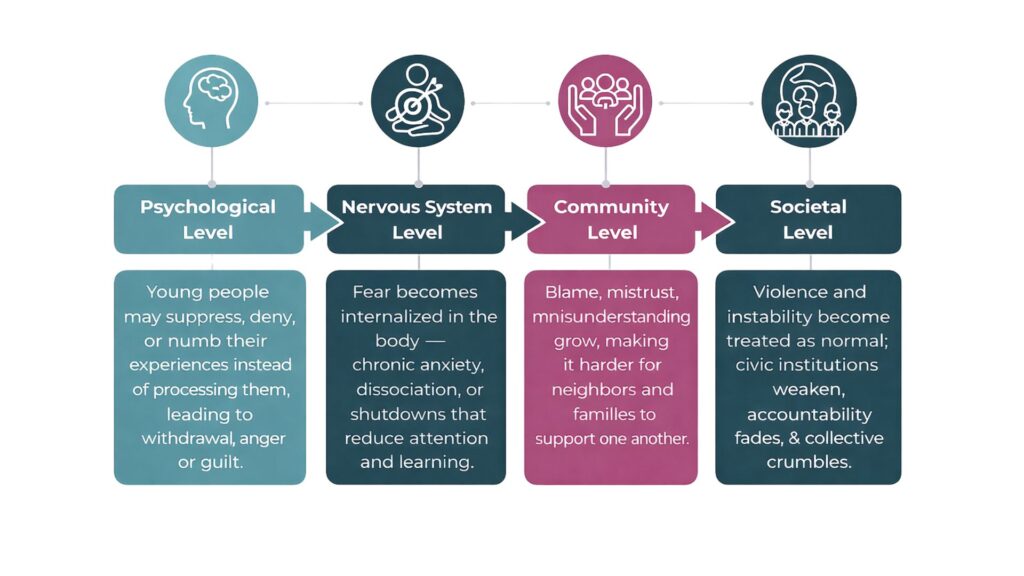
Schools cannot end the conflict, but they can shape how young people respond — helping them remember, grieve, question, and choose alternatives to silence, denial, blame, and despair.
Where schools are able to operate, we believe they should create spaces where students can reflect together — not to amplify fear, but to cultivate healing, empathy, and civic responsibility. At the same time, many children — particularly those who are displaced — continue to experience disrupted learning and must adapt to new environments. Supporting their sense of belonging, wellbeing, and citizenship remains essential.
nafda’s Response
Supporting Schools That Remain Open and Displaced Communities
In schools that have reopened, educators across the nafda network continue to introduce moments of reflection through citizenship engagement tools such as Aal Seha.
Their dialogue, reflections and learnings will be translated into collective initiatives — projects that respond to the needs of those affected by the crisis and strengthen solidarity among youth and displaced communities.
These initiatives reinforce an essential lesson: citizenship is not only something we discuss. It is something we practice.
Strengthening Trust in Host Communities
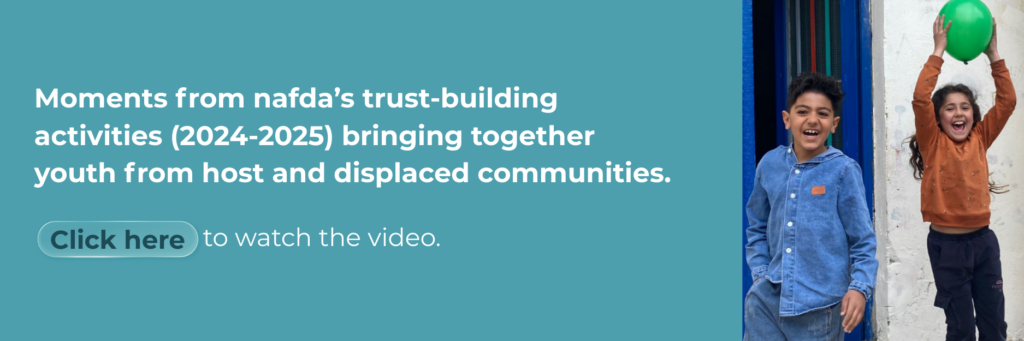
nafda is implementing a trust-building model in community centers and in schools hosting displaced families. The approach brings together youth from different backgrounds through short, repeated encounters that combine civic action, dialogue, and guided reflection.
The model is built around three core principles: collaboration rather than competition, shared experiences that allow young people to create and imagine together, and structured reflection that helps students understand their emotions and one another’s perspectives.
Through cooperative activities, dialogue exercises, and small civic initiatives, youth experience rare opportunities to meet peers they might not otherwise encounter. Facilitators introduce simple routines — emotional check-ins, collaborative tasks, and short reflections — that help students process their experiences and translate them into small collective actions such as community clean-ups, storytelling projects, or peer-support initiatives.
These encounters may be brief, but they matter. By collaborating, sharing hopes, and reflecting together, young people begin to rebuild trust and create memories that can shape how they see one another and their communities.
This approach was implemented during the previous war, reaching over 860 participants across five locations and demonstrating meaningful impact in strengthening trust and cooperation between host and displaced youth.
Beyond these local initiatives, nafda is also creating shared platforms that connect citizens across the country.
Through online dialogues, webinars, and facilitated conversations with specialists, these spaces will allow students and educators to engage with topics such as:
- wellbeing during conflict through psychosocial support
- edu-peace and daily peace indicators
- responsible citizenship and nonviolent problem solving
- empathy across communities through perspective taking
- constructive ways young people can respond in times of crisis
These initiatives are only part of nafda’s broader response. Additional efforts are currently being developed through strategic partnerships, while nafda’s National Student Council and Principal Council continue to shape initiatives across the network.
Support Our Work
In times of crisis, young people are often treated only as recipients of protection.
Protection is essential. But participation and agency matters just as much!
Giving young people a voice and real responsibility helps them process their experiences, build agency, and support one another.
If you would like to help ensure that the next generation learns not only how to endure crisis — but how to care for one another within it — we invite you to join us.